



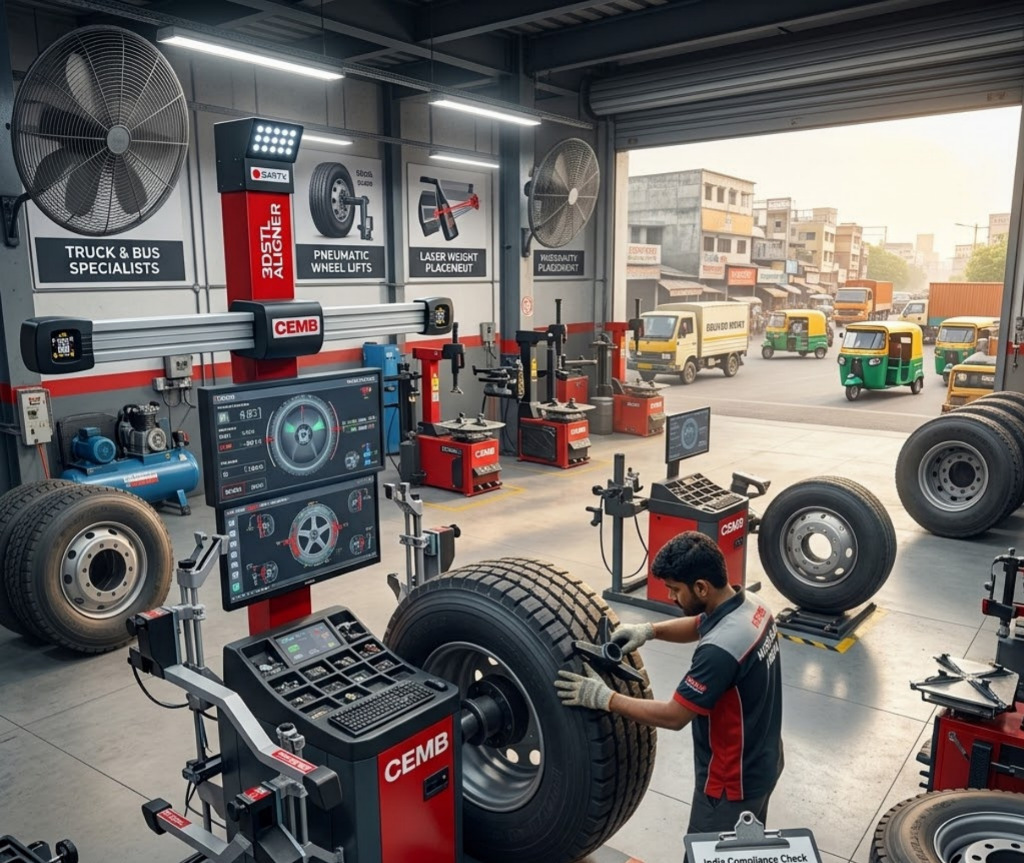
Running a high-throughput automotive garage requires speed, accuracy, and heavy-duty machinery. For service centers dealing with passenger cars, SUVs, and heavy commercial vehicles, investing in the best wheel balancer machine for commercial workshops in India is a critical decision. Unbalanced wheels cause severe tire tread wear, steering wheel vibrations, and suspension strain, leading to dissatisfied customers.
Choosing the right balancing equipment ensures precise weight distribution, fast cycle times, and enhanced shop productivity. This comprehensive guide walks you through essential features, key comparisons, and practical buying tips to help you select the ideal balancing machine for your business needs.
Why Wheel Balancing Precision Matters for Indian Roads
Indian road conditions feature diverse terrains, frequent potholes, and highway stretches that put vehicle tires to the test. Dynamic wheel balancing eliminates both static and dynamic imbalances across the tire assembly.
- Extends Tire Lifespan: Proper balance prevents uneven patches and premature tread wear.
- Protects Suspension Systems: Eliminates rotational vibrations that damage wheel bearings, tie rods, and shock absorbers.
- Enhances Driving Comfort: Smooths out steering vibrations at high highway speeds.
- Boosts Workshop Revenue: Fast and accurate wheel service builds customer trust and repeatable service visits.
Key Features to Look for in a Commercial Wheel Balancer
When evaluating wheel balancers for busy Indian garages, focus on hardware durability and software precision.
1. Dynamic vs. Static Balancing Modes
Commercial vehicles require advanced dynamic multi-plane balancing to correct horizontal and vertical weight misalignments. Ensure the unit offers specialized motorcycle, passenger car, and heavy commercial vehicle (HCV) modes.
2. Digital Display and Interface
Look for high-definition LED displays or intuitive touchscreen monitors. Clear visual cues guide technicians quickly through weight placement steps, reducing operator error.
3. Automated Data Entry (2D/3D Sonar)
Manual measurement input takes time and introduces human error. Advanced machines utilize automatic distance, width, and diameter sonar gauges to measure rim dimensions instantly.
4. Pneumatic Wheel Lift Integration
Heavy commercial truck wheels weigh up to 100 kg or more. Integrated pneumatic lifts eliminate manual lifting, protecting technicians from fatigue and workplace injuries while accelerating cycle times.
Types of Wheel Balancer Machines
Selecting the right category depends on your daily vehicle volume and workshop specialization.
| Balancer Category | Target Vehicle Type | Key Advantage | Ideal For |
| Manual / Entry-Level | Motorcycles & Small Passenger Cars | Low initial investment cost | Small local garages |
| Semi-Automatic 2D | Hatchbacks, Sedans, & Light SUVs | Fast rim parameter entry | Medium independent repair shops |
| Fully Automatic 3D Sonar | Luxury Vehicles & High-Performance Cars | High precision laser weight placement | Authorized service centers |
| Heavy-Duty Commercial | Heavy Trucks, Buses, & Trailers | Pneumatic lift & high weight capacity | Commercial fleet & highway tire centers |
Key Considerations for the Indian Workshop Environment
The Indian automotive repair market presents unique operational conditions that buyers must account for:
[ Power Grid Fluctuations ]  ──►  Requires Built-in Voltage Stabilizers
[ Dust & High Ambient Heat ]  ──►  Requires Sealed Electronics & Heavy-Duty Enclosures
[ High Daily Vehicle Volume ]  ──►  Requires High-Speed Motor & Quick-Nut Clamping
- Voltage Stability: Indian power grids often experience fluctuations. Choose machines equipped with internal surge protection or compatible with heavy-duty voltage stabilizers.
- After-Sales Support and Spare Parts: Ensure the brand has an established distribution and service network in India with ready access to replacement calibration cones, quick-nuts, and sensors.
- Durability in Heavy Dust: Workshop environments collect dirt and grinding dust. Look for sealed industrial keyboards and protected sensor assemblies.
Step-by-Step Buying Checklist for Workshop Owners
Before making a final purchase, run through these practical evaluation steps:
- Assess Daily Vehicle Volume: Determine whether you service primarily light passenger vehicles or heavy multi-axle trucks.
- Verify Maximum Rim Weight and Diameter: Ensure the shaft diameter and motor torque support your largest customer tire assemblies.
- Check Calibration Ease: Select equipment featuring simple user-led calibration steps without requiring specialized field engineers for routine adjustments.
- Compare Warranty & AMC Terms: Opt for suppliers offering comprehensive on-site warranty coverage and affordable Annual Maintenance Contracts (AMCs).
For international standards on tire safety and wheel alignment guidelines, visit the U.S. Department of Transportation (DOT) and review industry technical specifications on SAE International.
Upgrading to the best wheel balancer machine for commercial workshops in India is a long-term investment that increases daily service throughput and guarantees customer satisfaction.
By evaluating automated measuring features, heavy-duty build quality, and strong local service support, you can equip your garage for sustained profitability.
Ready to upgrade your workshop’s wheel servicing capabilities?
Contact our technical sales team today to request a free live demonstration and explore our full range of heavy-duty wheel balancers tailored for Indian service centers!
Frequently Asked Questions (FAQs)
Q1: What is the difference between 2D and 3D wheel balancers?
A: A 2D balancer automatically measures distance and rim diameter, requiring manual entry for rim width. A 3D balancer uses sonar or gauge arms to measure all three dimensions automatically, providing faster and more accurate readings.
Q2: Do I need a specialized wheel balancer for heavy commercial trucks?
A: Yes. Heavy truck wheels require a commercial-grade balancer equipped with a heavy-duty shaft, reinforced frame, specialized adapter cones, and integrated pneumatic wheel lifts to safely handle high weights.
Q3: How often should a commercial wheel balancer be calibrated?
A: It is recommended to calibrate your wheel balancer monthly under heavy workshop use, or immediately if the machine is moved, impacted, or displays inconsistent weight readings.
Q4: Why are laser weight positioning systems useful?
A: Laser positioning systems project a clear line showing exact weight placement points inside the rim core, eliminating guesswork and preventing repeat balancing cycles.