



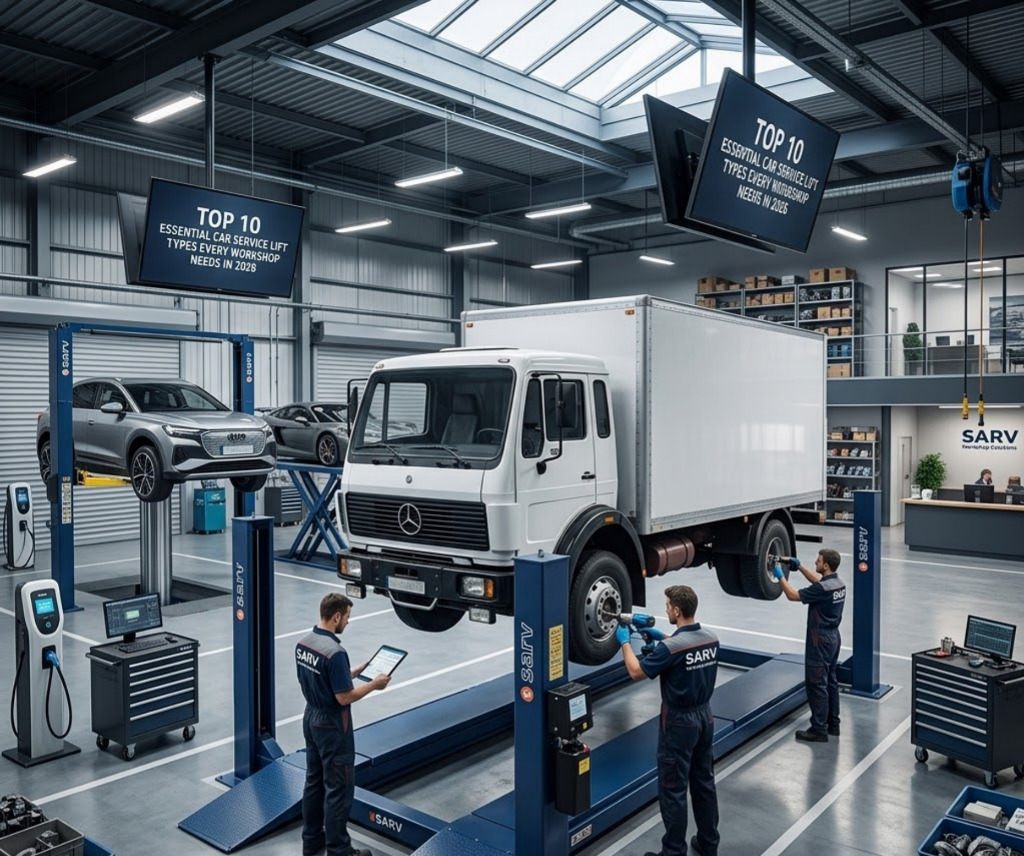
Modern automotive service centers run on tight schedules, high vehicle volumes, and evolving safety compliance standards. To keep up with passenger cars, SUVs, and heavy electric vehicles (EVs), selecting the right car service lift types is crucial for maintaining daily throughput. Investing in proper lifting equipment ensures your technicians work comfortably, complete repairs faster, and avoid workplace injuries.
Understanding the unique capabilities of different car service lift types allows workshop owners to allocate floor space efficiently and expand their service offerings. Whether you operate a quick-lube station, a high-volume tire shop, or a full-scale restoration garage, equipping your facility with the proper hydraulic and mechanical lifts directly impacts your long-term revenue.
Why the Right Car Service Lift Matters for Your Garage
Automotive repair requires easy access to undercarriage components, wheel assemblies, and powertrain units. Relying on outdated or unsuitable lifting solutions causes operational bottlenecks and safety hazards.
Maximizing Technician Efficiency and Comfort
Working on flat ground with basic floor jacks slows down mechanics and causes physical fatigue. Hydraulic vehicle lifts raise cars to an ergonomic working height, reducing strain on the back and neck. This physical ease allows technicians to perform wheel alignments, oil changes, and transmission flushes much faster.
Handling Heavier Modern Vehicles and EVs
Electric vehicles (EVs) are significantly heavier than traditional internal combustion engine cars due to floor-mounted battery packs. Choosing certified, high-capacity lifts guarantees your workshop can safely service heavy trucks, battery-electric sedans, and commercial vans without risking structural failure.
10 Critical Car Service Lift Types for Automotive Workshops
Different vehicle service bays require specialized lifting configurations. Here is a comprehensive breakdown of the ten essential lift designs used by professional repair facilities globally.
+---------------------------+------------------------+---------------------------------------+
| Lift Type                 | Typical Capacity Range | Best Suited Applications               |
+---------------------------+------------------------+---------------------------------------+
| Two-Post Lift             | 9,000 - 18,000 lbs     | General repairs, brakes, suspension   |
| Four-Post Lift            | 12,000 - 40,000 lbs    | Wheel alignment, heavy trucks, storage|
| Scissor Lift              | 6,000 - 12,000 lbs     | Quick service, tire shops, detailing  |
| In-Ground Hydraulic Lift  | 8,000 - 15,000 lbs     | Space-constrained bays, quick lubes  |
| Mobile Column Lift        | 32,000 - 72,000+ lbs   | Heavy commercial fleets, buses, RVs   |
| Alignment Lift            | 12,000 - 18,000 lbs    | Wheel alignment, suspension calibration|
| Parking / Storage Lift    | 6,000 - 10,000 lbs     | Vehicle storage, fleet stacking       |
| Low-Rise / Mid-Rise Lift  | 6,000 - 10,000 lbs     | Tire changing, brake service, bodywork|
| Parallelogram Lift        | 25,000 - 60,000 lbs    | Heavy-duty inspection, drive-thru bays|
| Portable Single-Post Lift | 3,000 - 6,000 lbs      | Small workshops, mobile repair units  |
+---------------------------+------------------------+---------------------------------------+
1. Two-Post Lifts (Symmetric and Asymmetric)
The two-post lift remains the most common choice for auto repair shops worldwide. Featuring two vertical columns and swing-out support arms, this design leaves wheels entirely free for brake, suspension, and exhaust work.
- Symmetric Two-Post Lifts: Position vehicles directly between the columns with equal weight distribution. Ideal for longer vans and pickup trucks.
- Asymmetric Two-Post Lifts: Angle the support columns back slightly, allowing vehicle doors to open wider for easier cabin access.
2. Four-Post Lifts
Four-post lifts utilize two drive-on ramps supported by four sturdy corner posts. They offer exceptional stability and ease of loading because technicians simply drive the vehicle onto the runways without positioning mechanical arms under the chassis.
- Excellent for long-term storage and vertical vehicle stacking.
- Preferred choice for heavy commercial trucks and long-wheelbase cargo vans.
- Can be converted for wheel-free service by pairing with rolling bridge jacks.
3. Scissor Lifts
Scissor lifts raise vehicles using accordion-style folding steel supports beneath the lifting platforms. When fully lowered, many scissor lift models rest completely flush with the workshop floor or project just a few inches high.
- Full-Height Scissor Lifts: Perfect for quick-lube bays and tire shops requiring fast drive-on capability.
- Compact Footprint: Eliminates side posts, leaving side pathways clear for technicians moving tools around the vehicle.
4. In-Ground Hydraulic Lifts
In-ground lifts house their hydraulic pistons and support frame beneath the garage floor level. When lowered, only the superstructures or pad supports remain visible, creating an unobstructed floor surface.
- Aesthetic Appeal: Delivers a clean, ultra-modern visual appearance ideal for dealership service drives.
- Space-Saving: Eliminates vertical posts, maximizing drive-through room in narrow workshop bays.
- Durability: Sealed hydraulic containment systems protect internal fluid pumps from dirt and moisture.
5. Mobile Column Lifts
Designed specifically for heavy-duty commercial fleets, mobile column lifts consist of individual wheeled lifting columns that roll directly up to a vehicle’s tires. They connect via cables or wireless signals to lift large buses, fire trucks, and semi-trailers in unison.
- Complete mobility allows technicians to set up temporary service bays anywhere in the facility.
- Modular expansion: System sets can scale from 4 columns up to 8 or more units synchronized together.
6. Alignment Lifts
Alignment lifts are specialized four-post or scissor lifts equipped with integrated slip plates and turn-tables on the drive-on runways. These built-in components allow vehicle wheels to turn freely without steering tension, yielding highly precise laser measurement readings.
- Vital for workshops offering advanced driver assistance systems (ADAS) and wheel alignment services.
- Features level locking mechanisms at exact heights to ensure precise sensor calibration.
7. Parking and Storage Lifts
For facilities dealing with severe square-footage constraints, parking lifts offer an economical solution to double storage capacity. By raising one vehicle off the floor, a second car can park directly beneath it in the same footprint.
- Typically utilizes a lightweight four-post design with solid platform runways.
- Provides space optimization for dealership holding lots, fleet yards, and detailing shops.
8. Low-Rise and Mid-Rise Lifts
Low-rise and mid-rise pad lifts raise vehicles anywhere from 24 to 48 inches off the ground. They provide quick lifting capability without taking up the vertical clearance required by full-sized post lifts.
- Tire and Body Shops: Gives fast access to wheels, rocker panels, and lower body panels.
- Low Ceiling Compatibility: Fits easily into older buildings or residential-style workshop units.
9. Parallelogram Lifts
Parallelogram lifts drive vehicles straight onto heavy platforms that move up and slightly forward or backward in an arc motion during lifting. Powered by synchronized hydraulic cylinders, they handle heavy loads without requiring vertical corner posts.
- Common in transit authority depots, heavy industrial maintenance bays, and quick-inspection lanes.
- Provides wide-open floor area underneath the vehicle without structural post obstructions.
10. Portable Single-Post Lifts
Single-post lifts utilize a single vertical column mounted to a reinforced base plate. Many models feature built-in wheels, letting technicians maneuver the lift across the shop floor like a heavy pallet jack.
- Great for small restoration shops or secondary service areas needing temporary lifting capacity.
- Leaves three sides of the vehicle entirely accessible for body prep and paint detailing.
Best Practices for Workshop Lift Maintenance and Safety
Installing quality equipment is only the first step. Establishing strict inspection protocols ensures long equipment life and protects shop personnel.
- Daily Safety Checks: Inspect hydraulic hoses, steel cables, safety locks, and arm pads for signs of wear or leakage.
- Annual ALI Certification: Schedule regular inspections by certified lift inspectors to satisfy occupational safety standards.
- Technician Training: Train all staff on weight distribution limits, proper pad placement points, and safety latch engagement.
- Clean Hydraulic Systems: Change hydraulic fluid regularly to prevent contamination in pump valves and lift cylinders.
Explore our full inventory of high-capacity Garage Shop Equipment to upgrade your service bays with reliable lifting solutions today.
For official equipment safety specifications and regulatory lifting standards, review the Automotive Lift Institute (ALI) Safety Guidelines before purchasing new machinery.
Upgrade Your Workshop Efficiency Today!
Equipping your facility with the right automotive lifts reduces repair turnaround times and boosts service profitability.
👉 Explore Professional Car Service Lifts at Garage Equipments and discover heavy-duty lifting equipment tailored to your garage requirements!
Frequently Asked Questions (FAQs)
Which car service lift is best for a general automotive repair shop?
A two-post lift (symmetric or asymmetric) is generally the most versatile choice for standard repair shops. It leaves the wheels hanging free, providing complete access to brakes, suspension components, steering systems, and under-engine assemblies.
What lift capacity do I need for servicing electric vehicles (EVs)?
Electric vehicles are considerably heavier than standard gas vehicles due to their large lithium-ion battery packs. Choose a lift rated for at least 10,000 to 12,000 lbs to safely accommodate electric SUVs, trucks, and luxury sedans.
How often should car service lifts be inspected for safety?
Workshop lifts should receive daily visual inspections by operators before use, alongside comprehensive annual safety inspections performed by a certified technician or Automotive Lift Institute (ALI) inspector.
What is the minimum ceiling height required for a two-post lift?
Most standard full-height two-post lifts require a ceiling height of at least 11 to 12 feet. If your shop has low ceilings, consider a low-rise scissor lift or a floor-plate two-post lift model designed for limited overhead clearance.