



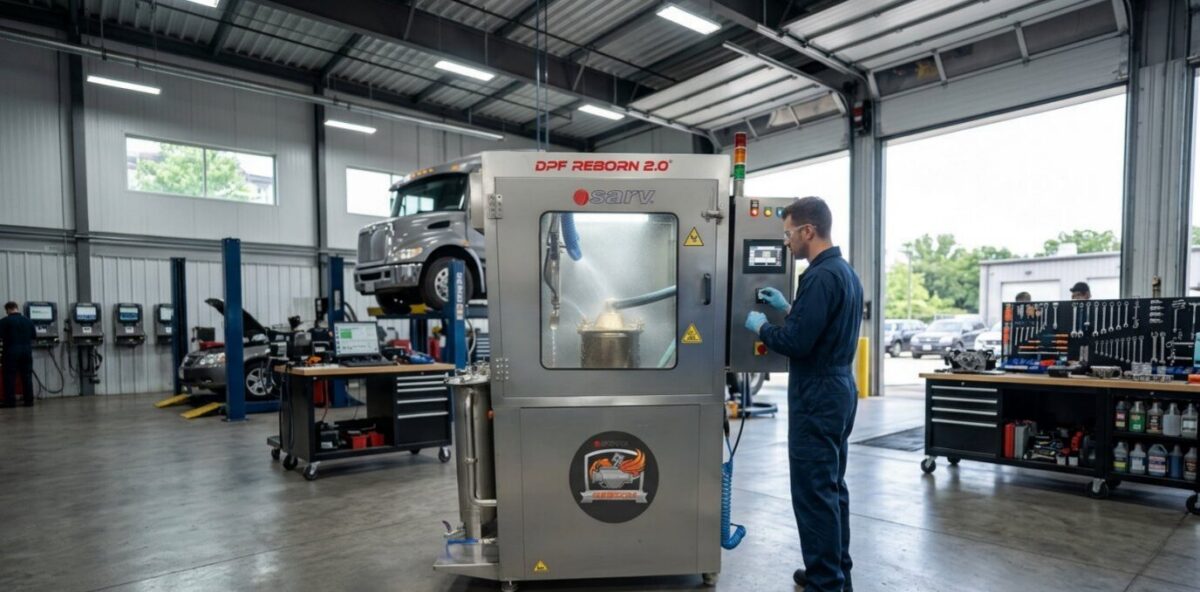
How DPF Cleaning Works: Complete Guide to DPF Cleaning Solution and Machines
Modern diesel vehicles rely on Diesel Particulate Filters (DPFs) to trap harmful soot and ash before exhaust gases leave the tailpipe. Over time, these filters fill up with unburned carbon and non-combustible ash. When a filter becomes restricted, engine back pressure rises, fuel economy drops, and dashboard warning lights appear. For commercial fleets, transport operators, and automotive workshops, understanding how DPF cleaning works—and choosing the right dpf cleaning solution—is essential to avoid costly filter replacements and keep vehicles on the road.
Whether you run a heavy-duty truck bay, a passenger car garage, or an emission service center, professional filter restoration offers a practical alternative to buying expensive new assemblies. In this guide, we break down the science behind filter clogging, step-by-step cleaning methods, equipment options, and how to turn filter maintenance into a reliable service line.
Why Diesel Particulate Filters Get Clogged
A DPF is housed inside the exhaust system and uses a porous ceramic or silicon carbide honeycomb structure to catch microscopic particulate matter. During normal highway driving, high exhaust temperatures burn off much of the dry soot through passive or active regeneration.
However, real-world operating conditions often prevent complete regeneration:
- Short trips and city stop-and-go traffic: Exhaust temperatures frequently stay too low to oxidize accumulated soot.
- Ash buildup over time: Engine oil additives and wear metals leave behind solid ash that high heat alone cannot burn away.
- Fuel quality and engine faults: Injector issues, boost leaks, or worn piston rings accelerate soot loading.
- Delayed maintenance: Ignoring early warning signs turns a routine cleaning job into severe restriction or thermal stress.
When blockage reaches a critical level, vehicles can enter limp mode, reducing power and increasing downtime for commercial operators.
What Is a DPF Cleaning Solution and How Does It Work?
A dpf cleaning solution is a specially formulated cleaning agent—often paired with heated water, air pulses, or controlled thermal/chemical cycles—designed to loosen, dissolve, and flush out soot, oil residue, and ash from inside the filter channels without harming the delicate ceramic substrate.
Unlike makeshift household chemicals or harsh acids that can melt coatings or crack the filter core, a proper cleaning formula works in a controlled way:
- Penetration: The solution reaches deep into narrow exhaust channels where dry air cannot dislodge baked-on deposits.
- Breakdown and suspension: It softens carbon buildup and separates oily residue and ash particles from the filter walls.
- Controlled rinsing and drying: Heated water or air flow flushes loosened contaminants out, followed by thorough drying so moisture does not cause corrosion or thermal shock when refitted.
Choosing a reliable dpf cleaner and process protects the filter’s washcoat, helping restore airflow close to factory specifications.
Step-by-Step: How DPF Cleaning Works in a Professional Workshop
A professional dpf cleaning workflow combines diagnostics, physical or chemical/aqueous cleaning, and airflow verification. While exact steps vary by machine design, most workshops follow a structured sequence:
1. Pre-Cleaning Inspection and Back-Pressure Check
Technicians scan fault codes, inspect the DPF casing for physical cracks or melting, and measure baseline back pressure or airflow. This confirms whether the filter is salvageable before cleaning begins.
2. Filter Removal and Setup
The DPF is removed from the vehicle (or brought in from a partner garage) and mounted securely into a dedicated dpf cleaning machine. Proper sealing ensures cleaning fluid and air flow evenly through the channels.
3. Main Cleaning Cycle
Depending on the equipment, the machine uses heated cleaning liquid, reverse-flow flushing, air pulses, or ultrasonic/hydrodynamic action to clear both entry and exit faces of the filter. Reverse flushing is especially effective because it pushes trapped soot and ash out the way it entered.
4. Deep Rinsing and Hot-Air Drying
Clean water rinses away remaining residue, and controlled hot air dries the core completely. Fitting a wet DPF back onto a hot exhaust line can create steam pressure or damage sensors.
5. Post-Cleaning Flow Test and Reinstallation
Technicians re-measure airflow and back pressure to verify improvement, reset ECU soot/ash counters where required, and test-drive the vehicle to confirm smooth operation.
Machine Cleaning vs. DIY Additives vs. Replacement
Workshop owners and fleet managers usually weigh three main options when dealing with blocked filters:
- Professional Machine Cleaning: Delivers deep, repeatable restoration for commercial vehicles, buses, and passenger cars. Using a dedicated DPF Cleaning Machine gives workshops full control over cleaning quality, turnaround time, and service margins.
- Fuel/Tank Additives: May help with light, early-stage soot in certain driving conditions, but cannot physically flush out heavy ash buildup or severely blocked filters.
- Full DPF Replacement: Often very expensive—especially for commercial trucks and buses—and leaves money on the table that your workshop could earn by offering restoration services.
For authoritative technical background on diesel emissions and aftertreatment standards, you can also review guidance from the U.S. EPA Diesel Emissions and Aftertreatment resources and ICCT emission standards publications.
DPF Cleaning Machine in India: Price, Manufacturer Factors, and Selection
Demand for dpf cleaning machine in india solutions has grown steadily alongside stricter BS6 emission norms and rising commercial fleet operating costs. Before investing, buyers should evaluate dpf cleaning machine price/manufacturer factors carefully rather than focusing on upfront cost alone.
Key Factors That Influence Price and Value
- Automation level: Semi-automatic units suit smaller garages starting out, while automated systems handle higher daily volumes with less manual intervention.
- Filter compatibility: Check whether the machine handles passenger car filters, light commercial vehicles, or heavy truck/bus DPFs—and whether adapters are included.
- Build quality and corrosion resistance: Stainless steel tanks and durable components matter when working with heated fluids and industrial duty cycles.
- Manufacturer support and training: A dependable manufacturer provides installation, operator training, spare parts availability, and technical service so your bay never sits idle.
When comparing options, ask suppliers for clear technical specifications, power/water requirements, cycle times, and realistic ROI calculations based on how many filters you plan to clean each week.
Expanding Beyond DPF: Complete Workshop Capabilities
Independent workshops and fleet maintenance hubs rarely rely on a single service. Once you establish a steady flow of commercial and passenger vehicles, pairing emission services with core bay equipment can increase average ticket size and repeat business.
For instance, workshops handling alignment, tyres, and lifting often plan investments around wheel alignment/tyre changer/lifts alongside bulk garage/tyre tools for everyday technician efficiency. You can also explore related workshop planning resources here:
- [Internal Link: Commercial Vehicle Workshop Planning Guide]
- [Internal Link: Essential Tyre Service & Puncture Repair Tools Checklist]
Practical Tips to Get Better Results Every Time
To get consistent results from your dpf cleaning solution and equipment:
- Fix root causes: Advise customers to repair boost leaks, faulty sensors, or oil burning so the cleaned DPF does not clog again quickly.
- Keep before-and-after records: Logging pressure or flow readings builds customer trust and proves the value of cleaning over replacement.
- Train technicians on safety: Always use proper PPE, eye protection, and ventilation when handling exhaust components and cleaning fluids.
Conclusion
Understanding how DPF cleaning works helps workshops and fleet operators turn a common BS6 maintenance headache into a high-value service. With the right dpf cleaning solution, disciplined inspection and drying steps, and dependable equipment, you can restore filter performance, cut downtime, and build stronger customer trust.
Ready to add DPF restoration to your workshop or compare machine specifications? Request pricing via DPF Cleaning Machine to plan your setup with confidence.
Frequently Asked Questions (FAQs)
How does a DPF cleaning solution remove soot and ash?
A DPF cleaning solution penetrates the porous filter channels to loosen carbon soot, oily deposits, and ash so they can be flushed out cleanly without damaging the ceramic filter core.
Is machine DPF cleaning better than replacing a clogged DPF?
When the filter core is intact and free of cracks or melting, professional cleaning restores airflow at a fraction of the cost of a new DPF assembly, saving money for both workshops and vehicle owners.
What affects DPF cleaning machine price in India?
Pricing depends on automation level, supported vehicle/filter sizes (car vs. heavy commercial), tank and component build quality, included accessories, and after-sales support from the manufacturer.
Can one DPF cleaner work for both cars and heavy commercial trucks?
Many workshop machines support multiple DPF sizes using proper mounting fixtures and adapters, though you should verify size capacity and flow power for heavy-duty commercial filters.
Why is drying and flow testing important after DPF cleaning?
Thorough drying prevents moisture-related issues when refitted into a hot exhaust system, while flow or back-pressure testing confirms the filter is actually clear before returning the vehicle.