



Is your fleet spending more time in the workshop than on the road? If yes, your Diesel Particulate Filter (DPF) might be the hidden culprit—and the decision between DPF Cleaning vs Replacement could be costing you more than you realize.
For fleet owners, every rupee matters. Whether you manage trucks, buses, or commercial vehicles, choosing the right solution for a clogged DPF can significantly impact your maintenance costs, downtime, and overall profitability.
Let’s break down DPF Cleaning vs Replacement in a practical, real-world way so you can make the most cost-effective decision.
What is a DPF and Why Fleet Owners Should Care
A Diesel Particulate Filter (DPF) is a critical component in modern diesel vehicles. It captures soot and harmful particles from exhaust gases to meet emission standards.
However, over time:
- Soot and ash accumulate
- Airflow gets restricted
- Engine efficiency drops
- Fuel consumption increases
If ignored, this can lead to expensive repairs and vehicle downtime—something no fleet owner can afford.
Understanding DPF Cleaning vs Replacement
When your DPF gets clogged, you typically have two options:
DPF Cleaning
This process removes soot and ash using specialized equipment like a DPF cleaning machine. It restores the filter’s performance without replacing it.
DPF Replacement
This involves removing the old DPF and installing a brand-new one.
Both options solve the issue—but the difference lies in cost, efficiency, and long-term value.
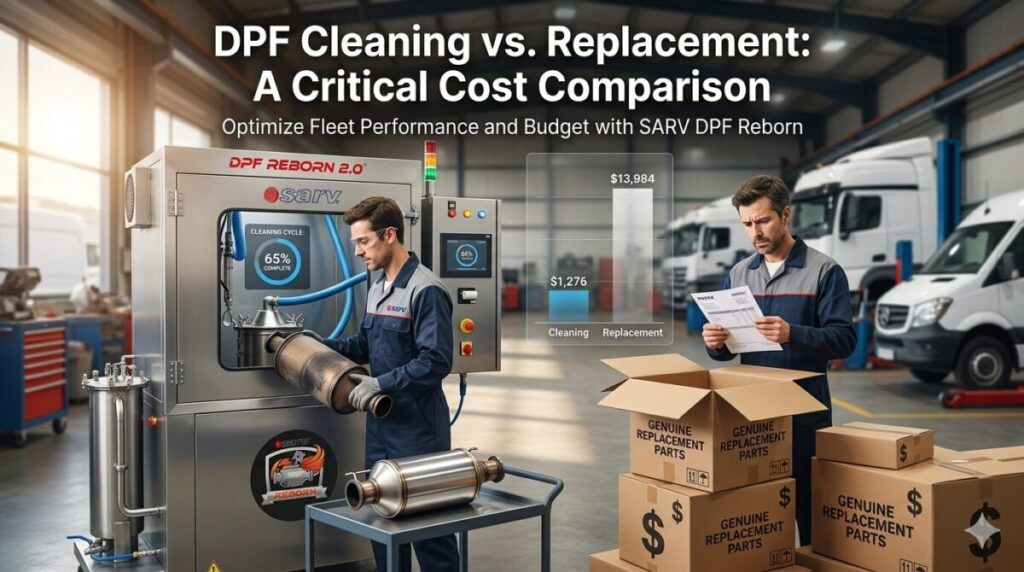
DPF Cleaning vs Replacement Cost Comparison
Let’s talk numbers—because this is where the real difference shows.
DPF Cleaning Cost
- ₹5,000 to ₹25,000 per filter
- Minimal labor cost
- Same-day turnaround in most cases
DPF Replacement Cost
- ₹50,000 to ₹2,50,000+ per filter
- Additional installation charges
- Possible delays due to availability
Clearly, in the DPF Cleaning vs Replacement debate, cleaning is far more budget-friendly—especially for fleets with multiple vehicles.
Long-Term Savings for Fleet Owners
Choosing between DPF Cleaning vs Replacement isn’t just about one-time cost—it’s about long-term savings.
When You Choose Cleaning:
- Lower maintenance expenses over time
- Extends DPF lifespan
- Ideal for preventive maintenance
- Saves lakhs annually for large fleets
When You Choose Replacement:
- High upfront investment
- Necessary only in extreme cases
- No protection from future clogging
👉 For most fleet operators, regular DPF cleaning is the smarter financial strategy.
Downtime: The Hidden Expense
In fleet management, downtime = lost revenue.
DPF Cleaning:
- Quick process (few hours to one day)
- Vehicles get back on the road faster
DPF Replacement:
- Waiting time for parts
- Installation delays
- More operational disruption
In the DPF Cleaning vs Replacement comparison, cleaning wins again by minimizing downtime.
Performance After Cleaning vs Replacement
After DPF Cleaning:
- Restores up to 90–95% efficiency
- Improves fuel economy
- Reduces emissions
After DPF Replacement:
- Full performance restoration
- But at a significantly higher cost
For most practical purposes, cleaning delivers nearly the same results at a fraction of the price.
When is DPF Replacement Necessary?
While cleaning is effective, there are situations where replacement is unavoidable:
- Cracked or physically damaged DPF
- Melted internal structure due to overheating
- Excessive ash buildup beyond recovery
- Repeated cleaning fails
In short:
If the DPF is structurally sound, cleaning is the better option. If damaged, replacement is necessary.
Environmental Benefits of DPF Cleaning
Another key factor in the DPF Cleaning vs Replacement decision is sustainability.
- Reduces industrial waste
- Minimizes need for new manufacturing
- Helps maintain emission standards
For businesses aiming to stay eco-friendly, cleaning is a responsible choice.
Why Modern Fleet Owners Prefer DPF Cleaning
Today’s smart fleet operators are shifting towards:
- Preventive maintenance strategies
- Scheduled DPF cleaning cycles
- Investing in DPF cleaning machines
Why? Because they understand that regular cleaning reduces breakdowns and saves money long-term.
Final Verdict: DPF Cleaning vs Replacement
| Factor | DPF Cleaning ✅ | DPF Replacement ❌ |
|---|---|---|
| Cost | Low | Very High |
| Downtime | Minimal | High |
| Efficiency | 90–95% | 100% |
| ROI | Excellent | Moderate |
| Best Use Case | Maintenance | Severe Damage |
Winner: DPF Cleaning (for most fleet scenarios)
Why the Right Equipment Makes All the Difference
The success of DPF cleaning depends on the quality of equipment used. Poor cleaning methods can lead to incomplete results and repeated clogging.
That’s why workshops and fleet operators should invest in advanced and reliable garage equipment to ensure:
- Deep and effective cleaning
- Faster turnaround time
- Consistent performance
- Long-term cost savings
Boost Your Fleet Efficiency with Garage Equipments
If you’re serious about reducing costs and improving fleet performance, it’s time to upgrade your workshop capabilities.
Garage Equipments offers high-quality, performance-driven solutions designed for modern garages and fleet operations. Our advanced DPF cleaning machines and garage tools help you:
- Cut down maintenance expenses
- Reduce vehicle downtime
- Deliver professional-grade service
- Improve overall operational efficiency
Whether you run a workshop or manage a fleet, Garage Equipments is your trusted partner for reliable and cost-effective solutions in India.
Final Thought
When it comes to DPF Cleaning vs Replacement, the smarter choice isn’t always the most expensive one.
Understanding when to clean and when to replace can save you thousands—and for fleet owners, that adds up to serious profits over time.
Make the right choice. Keep your fleet running efficiently. And invest in solutions that deliver real value.